
Career Highlights
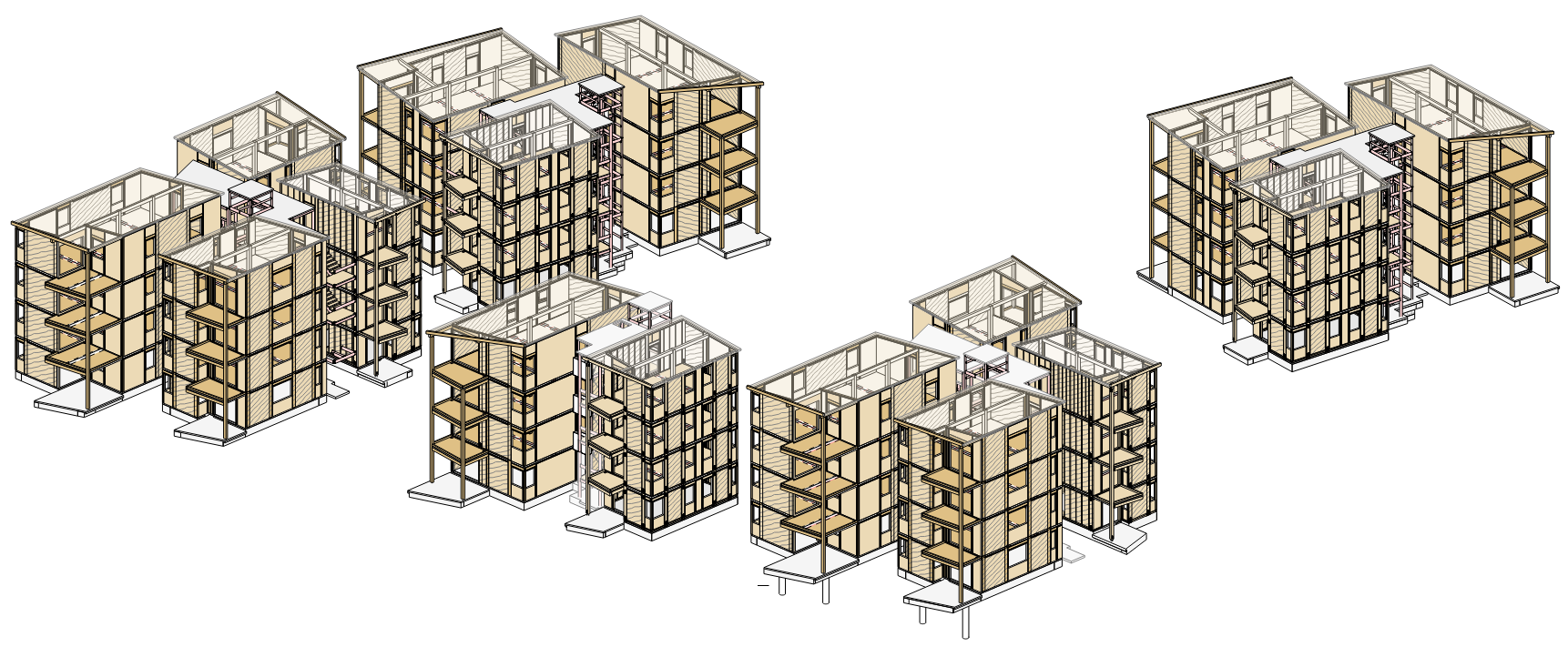
Milldale Stage 2H Development
Matt completed design of sixteen, 4-storey walkup apartment blocks constructed using glulam gravity framing, prefabricated panelised light timber frame walls and CLT floor/roof panels. Each level is an individual apartment and each block is connected by a modular steel frame walkup with solid Glulam decking. This development was Jalcon Homes second development in mass/prefabricated timber and this design was a refinement on their first successful mass timber development of three storey apartments at Hendon Avenue. The selected structural system is intended to be applied to apartment buildings up to 6 stories in future developments with minimal modification/change.
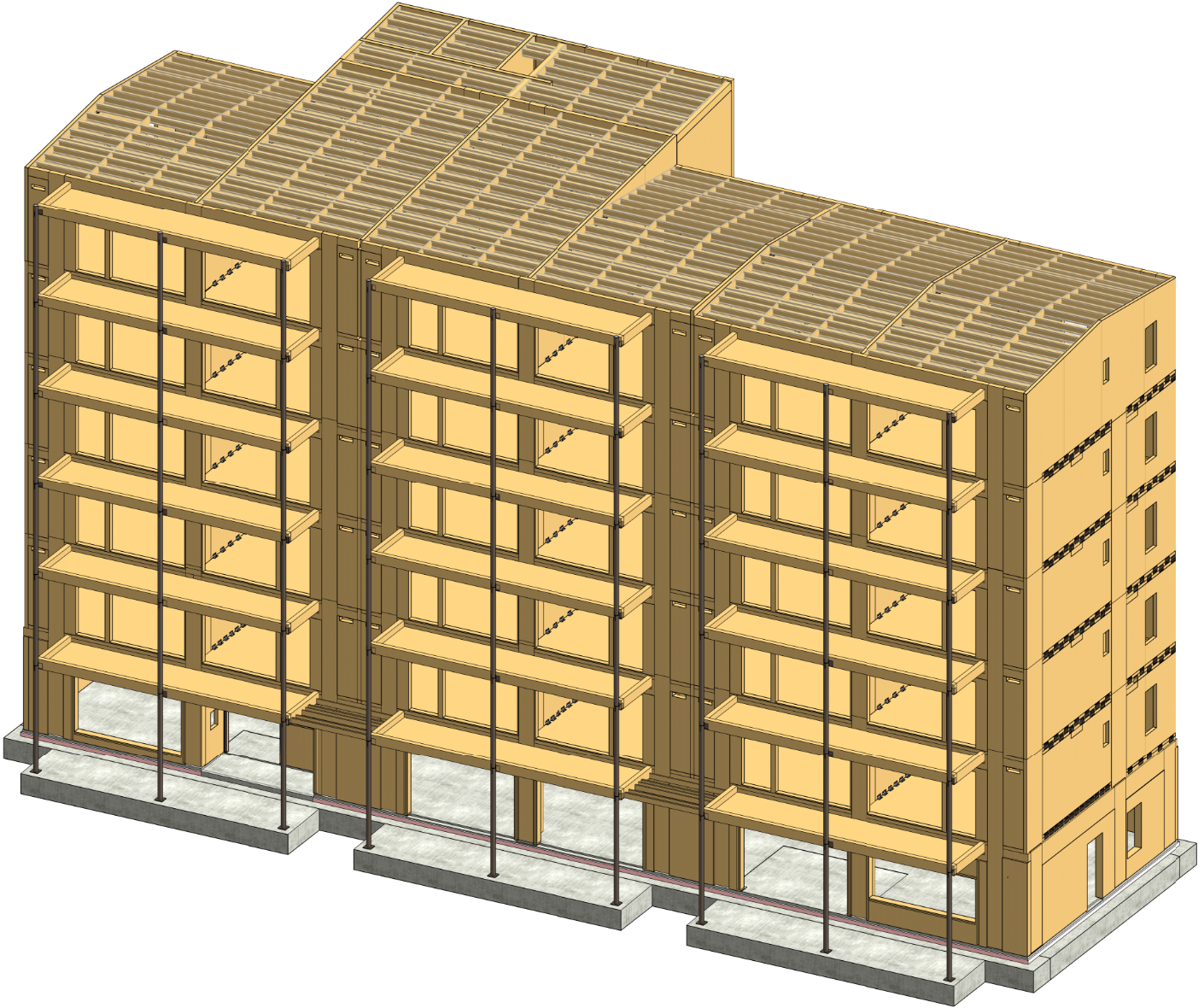
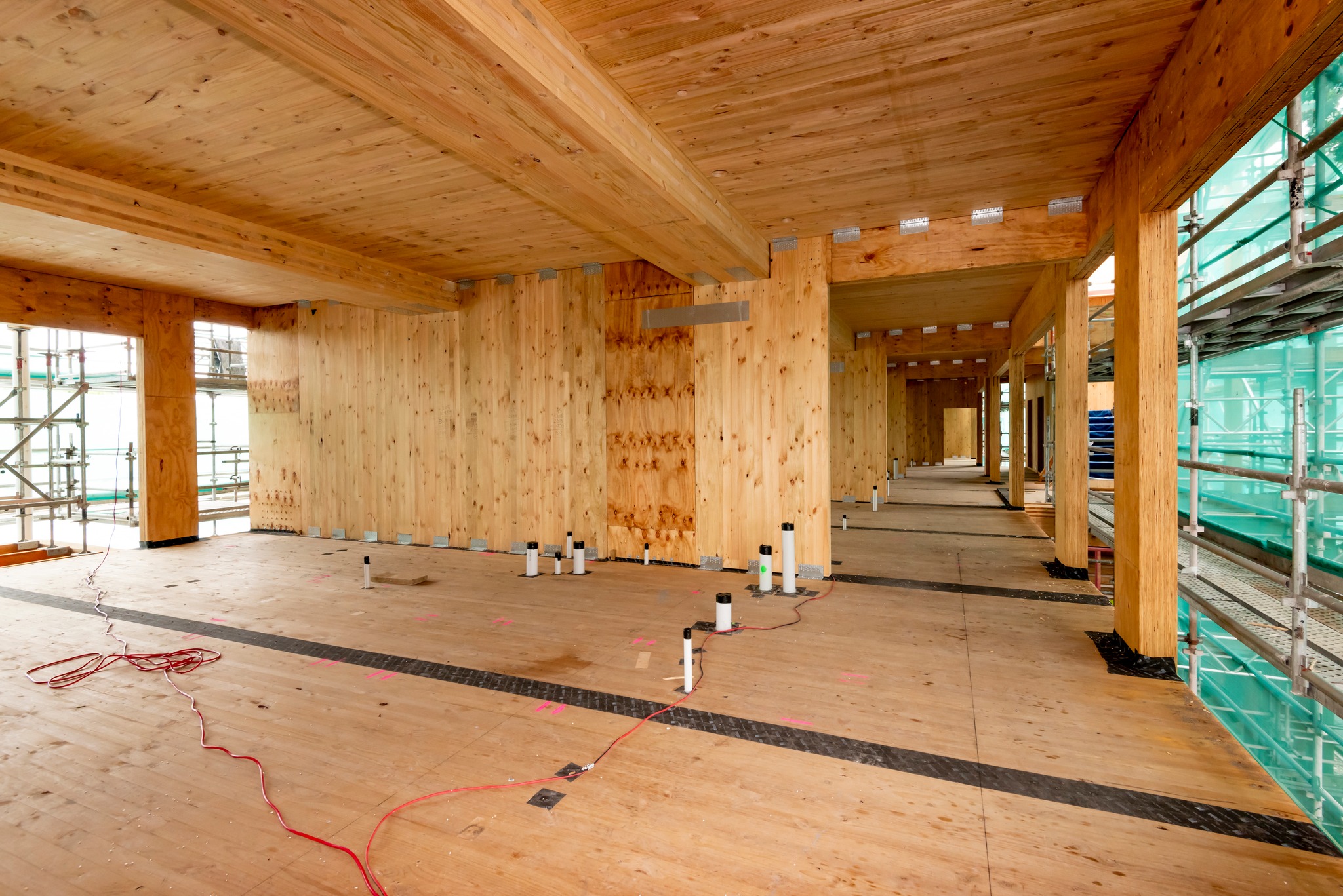
Highbury Triangle – Building B – Avondale
Overall site consists of five medium-rise apartment blocks between 6 and 8 stories constructed primarily using precast concrete and structural steel framing. This project represents one of the largest (single site) developments by Kainga Ora. Matt completed design and construction monitoring of the 6 storey Building B was designed as a complete mass timber structure for comparative purposes and to strive for low embodied carbon initiatives.

T35 Mountain Oak Apartments – Remarkables
Matt completed design and construction of a five-storey building with serviced apartment suites and studios and basement carpark. Fully ductile eccentrically braced frame and steel moment frame system is being used to dissipate energy under the high seismic loads applicable to the area with composite Comflor concrete floors. A special application of Olivier piles (Belgium screw piles) are being used with tension anchors (due to dense gravel soils over very deep rock). Internal lift and stair shaft walls and stairs are constructed using Cross-Laminated Timber (CLT) for speed and cost effectiveness. This building overlooks the spectacular Remarkables mountain range
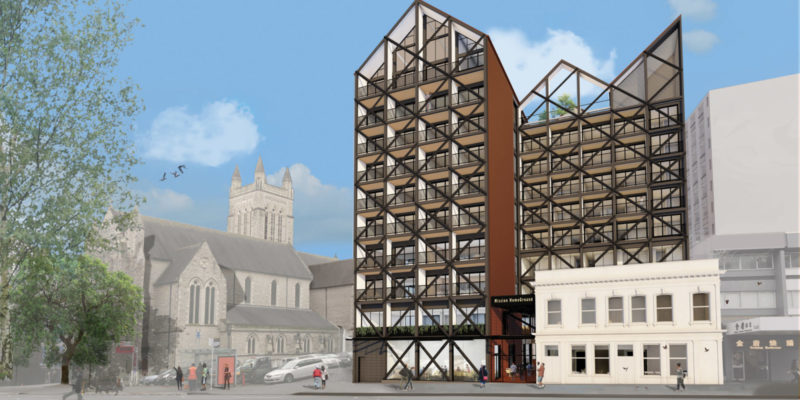
Auckland City Mission
Matt lead the structural planning, design, procurement and construction of the Auckland City Mission, a 13,000m², 10-storey, 95-unit commercial and multi-unit residential development in Auckland CBD. Matt designed the building using Cross Laminated Timber (CLT) from levels 2 to 9 on top of a conventional reinforced concrete and steel podium. The structure is founded on bored piles with a single storey basement below ground level. Lateral loads are resisted by concrete and mass timber shear walls and steel exoskeletal cross bracing. 3D modelling was completed with Etabs and BIM modelling using Revit.

Metlifecare – Fairway Gardens – Care Building
Fairway Gardens is a new retirement village with multiple three storey buildings including apartment, amenity and care facilities. The three-storey Care building is a mirrored Z shape structure with two wings located at the north and south that form the majority of the care suites. The foundations on ground floor comprise reinforced concrete shallow waffle raft system. Floors above this are cross laminated timber (CLT) supported by CLT walls and supplementary steel beams. For the common access area (between the two wings), the CLT floor is all supported by steel framing to allow the openness of the common area. The wings are braced by CLT walls in both orthogonal directions and a two-way steel moment resisting frame is used for the common.
Matt completed internal review and quality assurance on the mass timber superstructure and completed the waffle raft foundation analysis and design.

Metlifecare – Gulf Rise Precinct 2 – Care Building
Gulf Rise is a new retirement village with a variety of residential dwelling types and amenities ranging from single storey villas to multi-unit apartment blocks (up to 3 stories). The Care building is a three-level engineered timber structure, which incorporates prefabricated bathroom pods, cross-laminated timber (CLT) walls and floors, prefabricated external walls from Symonite and a prefabricated light timber frame roof cassette system. This project is the first application of a kit-of-parts for Care Buildings developed with close consultation with Metlifecare and achieves a Greenstar 6-star rating (plus other performance criteria defined by the Client).
Matt completed internal review and quality assurance on the mass timber superstructure and completed the waffle raft foundation analysis and design and the design of the entry structure.

Asure Quality
The Asure Quality Office in Auckland is a 2.5 storey commercial office space and upper mezzanine with a footprint of circa 2100m2 comprising office spaces, a cafeteria with external deck, meetings rooms, storage and end of trip facilities. The structure consists of composite concrete floors on steel portal frame and precast concrete shear walls on shallow strip foundations.
Matt lead design at the early stages and completed the developed design and structural ETABS modelling.

Hammersmith Town Hall – London
7 storey, grade 2 listed commercial/government building redevelopment in Hammersmith, London. The redevelopment involves the partial demolition and extension to the existing 4 storey brick structure with an additional 3 storey vertical extension which provides an additional 15,000m² of office and public space. Initial design to the equivalent of New Zealand ‘developed design’ was completed by Meinhardt structural engineers with Matt’s role under contract by the steel fabricators covering the structure logistics, breakdown, coordination, detailed design of all connections and the design and coordination of all demolition and erection temporary works for the lead Contractor. The existing structure is brick and concrete encased steel with clay pot floors and deep pad foundations. Lateral loads are resisted by 7 stair cores that are reinforced as part of the extension. The extension features long-span (40m) fabricated box girder trusses on 8 primary columns on piled foundations. Designs were completed with Robot Structural Analysis.
Matt Lead Structural Detailed Design and Temporary Works Engineering. Key responsibilities included liaison with client, contractor and lead engineers, coordination of structure break-up and erection methodologies, detailed design of structure connections, demolition and erection temporary works design and coordination.

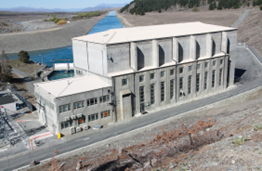
Tuai and Tekapo A Hydro-Station Detailed Seismic Assessment and Strengthening
Matt completed the Detailed Seismic Assessment (DSA) and strengthening of the Tuai and Tekapo A hydro powerhouses under the NZ portfolio-wide assessments for Genesis Energy Limited. The structures are classed as complex structures of Importance Level 3 and 4 as they are required for the continuity of the NZ power grid and therefore complex 3D finite element modelling and linear and non-linear push over assessments were completed to give more accurate representations of the structure’s inherent capacity to current design standards.
The 1200m2 Tuai substation was constructed in 1929 with reinforced concrete shell turbine hall and an integral multi-level annex that houses the control room, switchgear, workshop and storage facilities. Seismic assessment and strengthening design brought capacity up to 67% of the new building standard (%NBS) capacity.
The 800m2 Tekapo A substation was constructed in the 1940s with reinforced concrete portal frame powerhouse and 3 story shell wall administration and controls building. Push-over analysis found this structure to have inherent capacity to exceed 100% of current new building standard (%NBS) capacity and strengthening was not required.
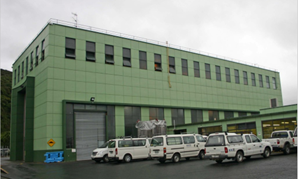
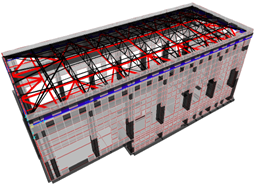
Transpower National Seismic Upgrades, New Zealand – Haywards Substation Seismic Assessment and Strengthening
Matt led the Detailed Seismic Assessment (DSA), strengthening design, construction, and project management for 50 substations across New Zealand as part of the Transpower National Seismic Upgrades Project. These buildings are critical to maintaining NZ’s electricity transmission network and are classified as Importance Level 4 due to their required post‑disaster function. All strengthening works were completed to Transpower’s minimum target of 75% NBS.
A key project was the assessment and strengthening of the 1950s Haywards condenser building in Wellington. This reinforced concrete structure has an 850 m² footprint and a 14.4 m open internal height above a partially suspended floor slab, with a single‑storey basement below. It houses four synchronous condensers essential to grid stability, each valued at around $20M. The building comprises a light roof on steel trusses behind reinforced concrete parapet walls, supported by reinforced concrete gravity columns and shell walls. The monolithic columns carry large concrete rail beams that support an 80‑tonne rail crane used to remove the condensers. The substructure consists of a reinforced concrete slab with strip and pad footings. The seismic assessment required complex non‑linear pushover analysis. Strengthening involved installing a roof‑level steel braced diaphragm and applying Carbon Fibre Reinforced Polymer (CFRP) to the columns, increasing the building’s capacity to 83% NBS.
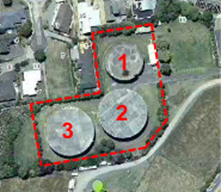
Maldive & Cambridge Road Reservoirs 1, 2 and 3 – Detailed Seismic Assessment
Matt was the structural lead for the Detailed Seismic Assessment and strengthening of three reservoirs in Tauranga and one in Wellington. These 1950s structures use pre‑stressed, post‑tensioned, and reinforced concrete systems. All assessments were completed to current standards and NZSEE guidance, with 3D modelling carried out in SAP2000.
The three Cambridge Road reservoirs in Tauranga were classed as complex structures due to their pre‑stressed/post‑tensioned systems and significant hydrostatic and hydrodynamic loading. As key water‑supply assets, they are rated Importance Level 3. Matt developed calculation tools to assess hydrodynamic loads in accordance with NZSEE (2009) and NZS 3106:2009. His assessments found Tanks 1, 2, and 3 achieved 70%, 82%, and 77% NBS respectively, with all expected to withstand a 1-in-1000‑year ULS seismic event without major damage or loss of water. However, Tank 1 showed significant roof sag and durability concerns due to exceeding its 50‑year design life.


Pacific Aviation Investment Project, Tuvalu – Funafuti International Airport Terminal Construction
Matt was the local Superintendent and Engineers Representative in the construction of an Importance Level 3 (IL3), 1000m2 single storey airport terminal and runway navigational aids in the developing country of Funafuti, Tuvalu for the World Bank sponsored Pacific Aviation Investment Project. Role included local placement in the developing country during the construction period to supervise construction activities and undertake project management roles representing the Engineer to the Contract. Remotely carried out design and construction management of Kiribati and Soloman Island airports in parallel. Structural systems include precast concrete moment columns, dual pitch glulam timber rafters and integral 800m3 water cistern constructed into the shallow concrete strip foundations.